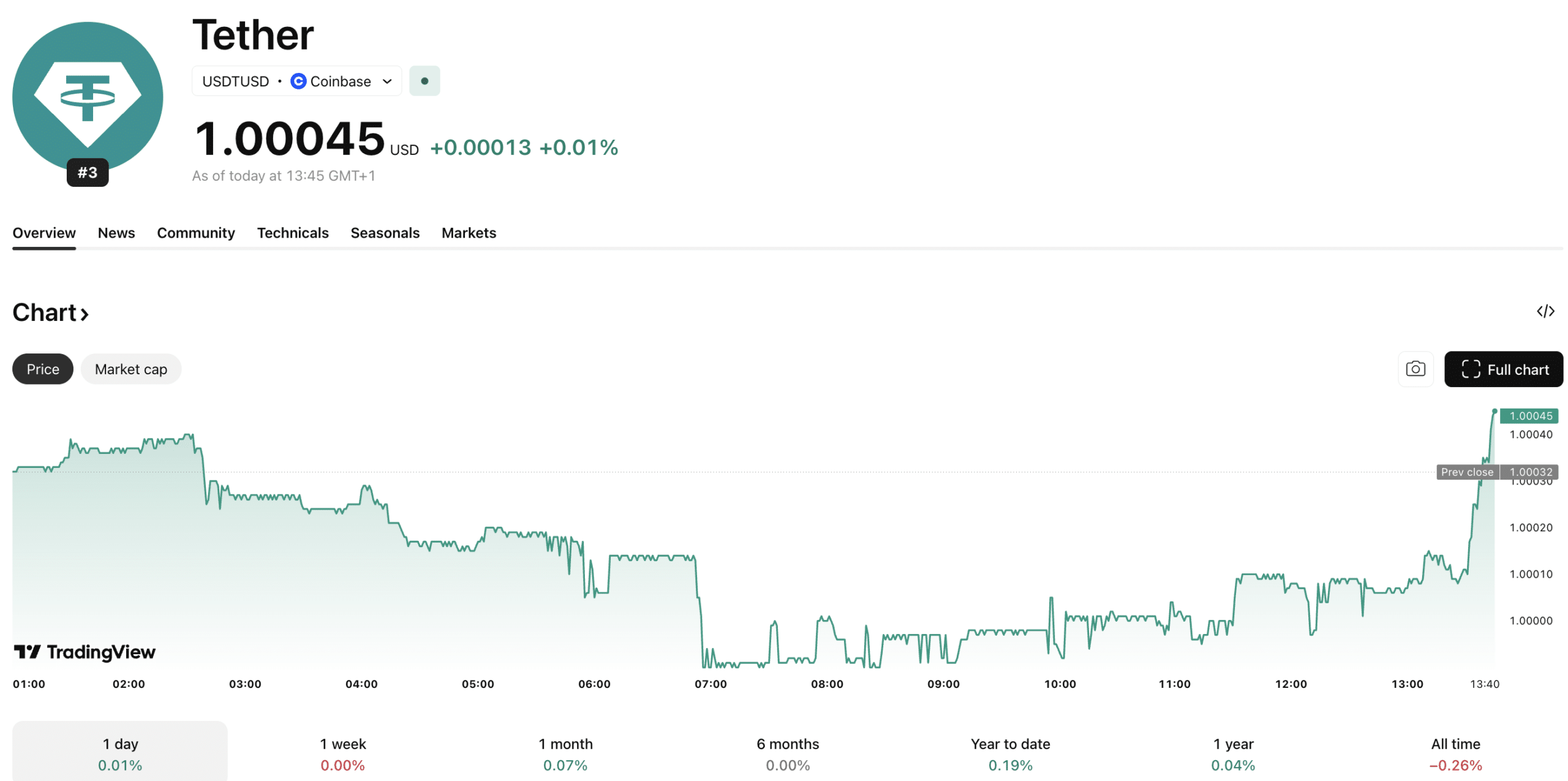
Tether (USDT) hit an all-time high market cap of $188Bn on April 21, 2026, widening its lead over Circle’s USDC, which sits at $78.25Bn, following a $285M hack of Solana-based Drift Protocol.
The gap between the two stablecoins has been growing since attackers linked to North Korea moved $232M in USDC during an eight-hour exploit window, triggering a wave of DeFi outflows and a class action lawsuit against Circle.
The detail most headlines are missing, though, is that this isn’t really a story about market share. It’s a story about what users do when they get scared and what that behavior reveals about which stablecoin they actually trust when things go wrong. That’s a very different question from which one is objectively safer, and the answer might surprise you.
What the USDT and USDC Market Cap Gap Tells Us
Think of stablecoins like two competing dollar-pegged IOUs issued by different banks. Both promise you can redeem one token for one dollar at any time. The difference lies in who’s making that promise, how they back it, and how quickly you can exit when the building starts shaking.
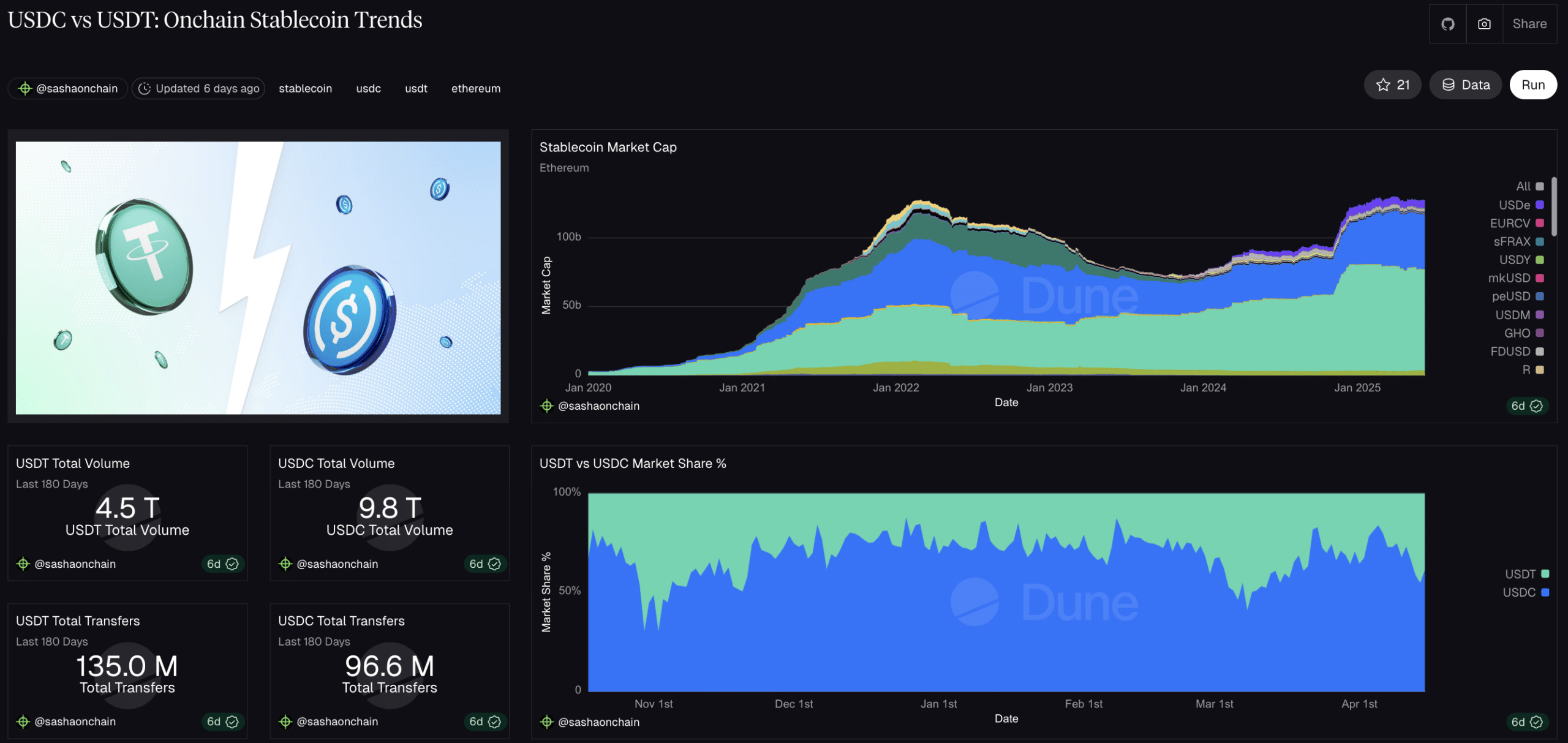
USDT’s $188Bn market cap means $188Bn worth of those IOUs are circulating, making it roughly 2.4 times USDC’s market cap. Since the Drift exploit, USDT has grown +2.1%, while USDC has grown just +1.4%. That 0.7 percentage-point difference sounds small, but at this scale, it amounts to billions of dollars in user decisions made under stress.
Jake Kennis, senior research analyst at blockchain analytics firm Nansen, put it plainly: The deeper liquidity of Tether across centralized exchanges creates a more immediate “flight to safety” path during DeFi crises, particularly for users who need rapid exits from on-chain positions.
What the numbers don’t tell you is whether those users were making a rational safety judgment or simply defaulting to the more familiar option. Network effects and genuine safety are not the same thing. That distinction matters more than the market cap figures themselves.
The Real Safety Question: Reserves, Transparency, and What ‘Safe’ Actually Means Here
Both USDT and USDC carry different kinds of risks that beginners often confuse. USDC is considered safer due to its regulatory compliance and transparency; Circle publishes monthly reserve attestations and mainly holds funds in U.S. Treasuries and cash.
However, the Drift hack raised concerns when Circle decided not to freeze $232M in compromised funds, leading to a class-action lawsuit and an 8% drop in its share price.
In contrast, USDT has faced scrutiny over its reserve transparency but has never broken its peg and still accounts for about 60% of the stablecoin market.
While USDC’s risks are regulatory and operational, USDT’s primary risk lies in its lack of transparency regarding reserves. Both present distinct risks for users.
EXPLORE: Top Crypto Presales to Watch This Month
Why Tether Keeps Winning Despite the Scrutiny And What That Means for You
GLOBAL CENTRAL BANK WATCHDOG WARNS STABLECOINS COULD SHAKE GLOBAL FINANCE
BIS chief warns US stablecoins like $USDT and $USDC "raise serious risks for financial integrity and can facilitate regulatory circumvention.”
Pablo Hernández de Cos says these tokens can "evade… pic.twitter.com/zPIp4gJnME
— Coin Bureau (@coinbureau) April 20, 2026
The dominance of Tether stems from its liquidity, which makes it the preferred exit ramp for users who need stable assets quickly during crises, particularly after DeFi hacks. Analysts from Compass Point highlighted that outflows from USDC could hurt interest revenue for Circle and Coinbase, especially if regulatory pressures increase.
The stablecoin market surpassed $320Bn in mid-April 2026, with USDT benefiting from more integrations and stronger adoption, particularly in emerging markets.
For those holding stablecoins, the critical question isn’t about marketing but understanding the risks. With USDC, consider the implications of Circle’s compliance decisions; with USDT, consider Tether’s reserve transparency. Both questions are important and lack clear answers, so it’s essential to reflect on them before deciding where to invest your funds.
DISCOVER: Best Crypto Presales With Staking Rewards
Follow 99Bitcoins on X, YouTube, and Telegram for more crypto news and analysis.
The post Tether Tightens Its Lead Over USDC as Stablecoin Safety Questions Return appeared first on 99Bitcoins.