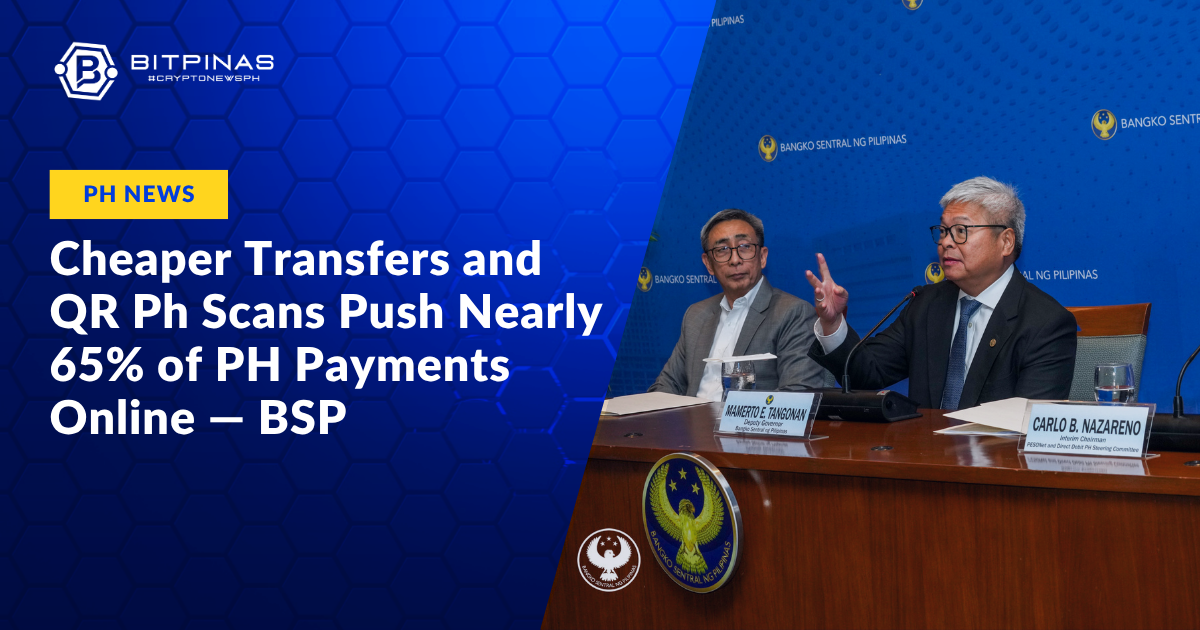
Paying for street food, settling bill payments, or sending money to family across the Philippines is no longer dependent on carrying physical cash or waiting for paper checks to clear. Driven by shrinking fund transfer fees and instant QR code scans, nearly two-thirds of all retail transactions in the country are now handled electronically. This is according to a new report published by the Bangko Sentral ng Pilipinas (BSP).
From Wallet Cash to Daily Scans
For everyday consumers and small merchants, the friction and cost of moving money digitally has dropped significantly. Policy reforms, most notably BSP Circular No. 123, have pressured financial institutions to keep inter-bank transfer fees reasonable and comparable to internal transfer costs. (Read more: List: PH Banks With Free InstaPay and PESONet Transfers After BSP Fee Rules)
At the same time, national interoperability standards like QR Ph mean consumers no longer need to worry about which specific bank or e-wallet app a merchant uses. Scanning a single merchant QR code works instantly across participating platforms, embedding digital payments directly into daily routines.
Micro-Transactions Take Over
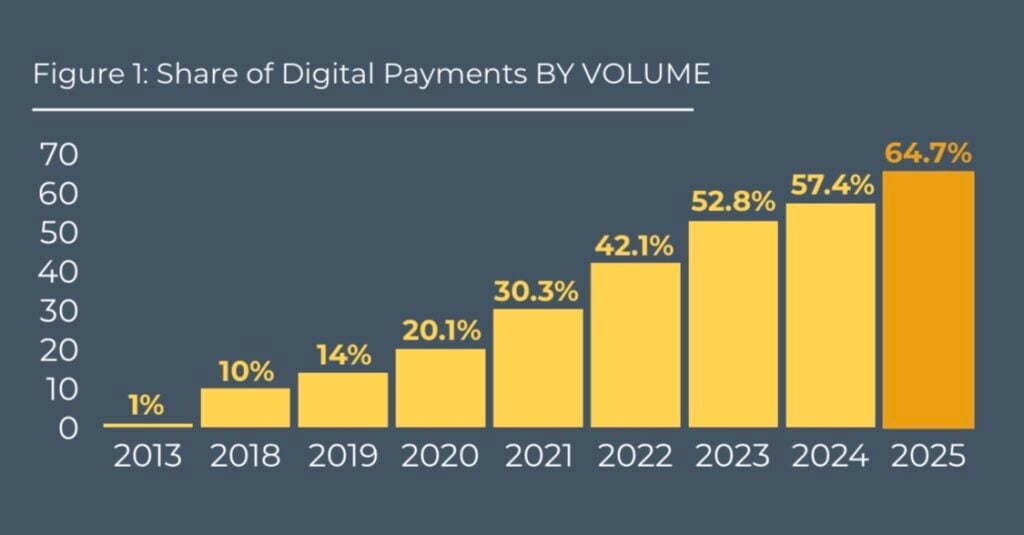
Data from the BSP’s 2025 Report on the Status of Digital Payments in the Philippines shows electronic transactions surged to 64.69% of overall retail transaction volume in 2025, up from 57.45% in 2024. This trajectory officially fulfills the government’s 60% to 70% target range established under the Philippine Development Plan 2023–2028. (Read More: QR Ph Becomes Top Payment Method for Philippine Businesses, PayMongo Reports)
- QR Ph dethrones traditional cards: Processed QR Ph transactions reached 2.47 billion payments valued at ₱1.16 trillion in 2025, surpassing debit and credit card usage for the first time.
- Person-to-merchant payments accounted for 74.31% of total digital transaction volume, backed by a 36.3% increase in physical and online merchant outlets accepting digital options.
- Corporate supplier payments routed through PESONet officially surpassed paper checks in late 2025 as businesses embraced same-day clearing cycles.
- While total transaction volume climbed, digital payments represented 53.32% of total transaction value in 2025, down from 58.98% in 2024. This shift confirms that Filipinos are actively using digital wallets for high-frequency, low-value everyday purchases rather than reserving them solely for large transfers.
- Note that this data was for 2025, which is before these financial institutions drop their transfer fees.
Building a Unified Ecosystem
“A lot of the growth is due to our insistence on interoperability, ensuring that a growing number of businesses and service providers are on one system,” said BSP Governor Eli M. Remolona, Jr. “That brings in more users, which makes the network more valuable for everyone in it, including consumers, businesses, banks, e-wallets, and other platforms.”
Looking ahead, central bank initiatives aim to integrate digital payments into public transportation systems via automated fare collection, expand cross-border remittance links, and roll out direct e-commerce checkout tools to ensure electronic payments remain the default choice for Filipinos.
This article is published on BitPinas: Cheaper Transfers and QR Ph Scans Push Nearly 65% of PH Payments Online
What else is happening in Crypto Philippines and beyond: