Key Takeaways
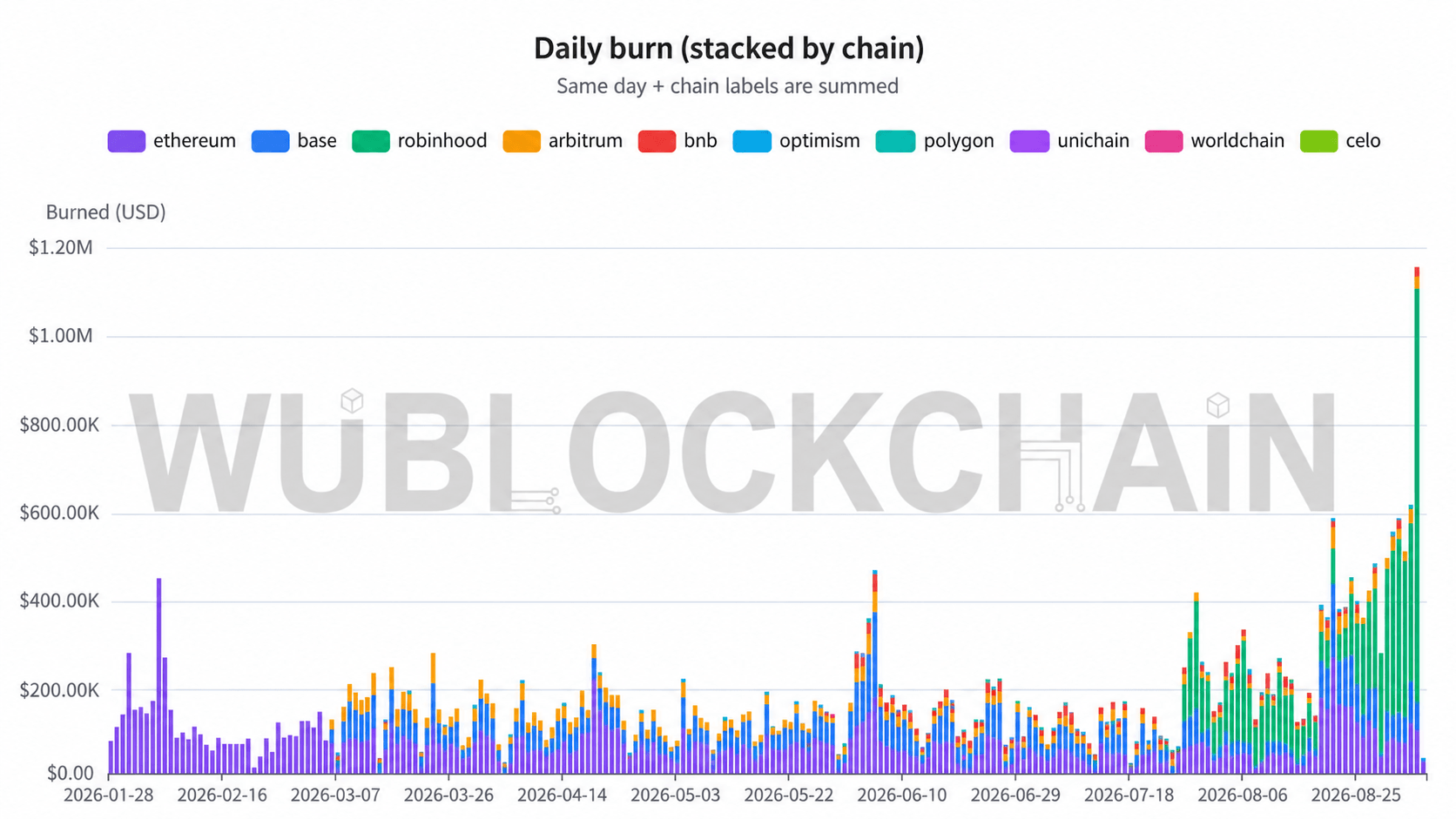
- Uniswap burned 184,000 UNI worth $1.15 million yesterday, with 150,000 tokens tied to Robinhood Chain.
- Robinhood Chain has handled $34.6 billion in DEX volume and 576 million transactions since its July 1 launch.
- Blob posts to Ethereum stalled 14 minutes on the record day, but Arbitrum says the chain never went down.
The Burn
Starting with the number Uniswap holders care about, the protocol burned 184,000 UNI on Thursday, worth about $1.15 million. It was the first time the daily burn crossed $1 million in dollar terms and the second-largest by token count since the mechanism went live. Roughly 150,000 of those tokens, more than 80%, were paid for by traders on Robinhood Chain.
That is how the fee switch is supposed to work. Uniswap token holders approved the “Unification” proposal on Christmas Day 2025, redirecting a slice of protocol fees that previously went entirely to liquidity providers into buying and burning UNI. The upgrade also destroyed 100 million UNI upfront. Since then, the size of each day’s burn has tracked one thing, i.e., how much volume runs through Uniswap’s pools.
Where the Volume Came From
On Thursday, Robinhood Chain’s daily decentralized exchange (DEX) volume topped $3 billion for the first time, with Uniswap handling as much as 98% of it. Six days earlier, the record was $875 million, when Uniswap v4 and v3 split $789 million between them. The chain more than tripled that in under a week.
Robinhood Chain is an Ethereum layer two (L2), a network that processes transactions off the main chain and posts compressed data back to it for settlement. It launched on July 1, built on Arbitrum’s Nitro stack, and was pitched as the home for Robinhood’s tokenized stocks. Sixty-four days in, its unaudited scorecard reads $34.6 billion in DEX volume, 576 million transactions, 12.3 million addresses, and more than 190 stock tokens. Uniswap took roughly 86% of the chain’s spot volume over the trailing 30 days.
Not all of that volume was stocks, as a large share was also memecoins, the same launchpad activity that let one wallet turn $220,000 into $4.7 million on CASHCAT and PONS last week. Whatever the trader’s motive, the swap fee is the same, and a cut of it now ends up as burned UNI.
The 14 Minutes
The record day came with a wobble between 12:29 and 12:48 UTC, as a result of which Robinhood Chain’s blob submissions to Ethereum stopped twice, for a total of about 14 minutes. Blobs are the data packets that an L2 posts to Ethereum so its transactions can be verified. They are bought in a fee market, and on Thursday that market got crowded: Base nearly tripled its blob usage during the window, from 222 to 593.
Arbitrum said the chain experienced batch submission delays because of blob market conditions on Ethereum’s base layer, but that Robinhood Chain itself did not go offline and direct user transactions were not delayed. Some infrastructure providers that depend on the chain’s data feeds saw brief performance issues from high subscriber volumes.
On a more technical note, during the first gap, 263 blob slots sat unused and the base fee was roughly one-seventh of Robinhood’s standing bid. Robinhood Chain is now the single largest blob poster on Ethereum, at 28% of all blobs during the crunch and 45% in the calm window before it.
What It Means for UNI
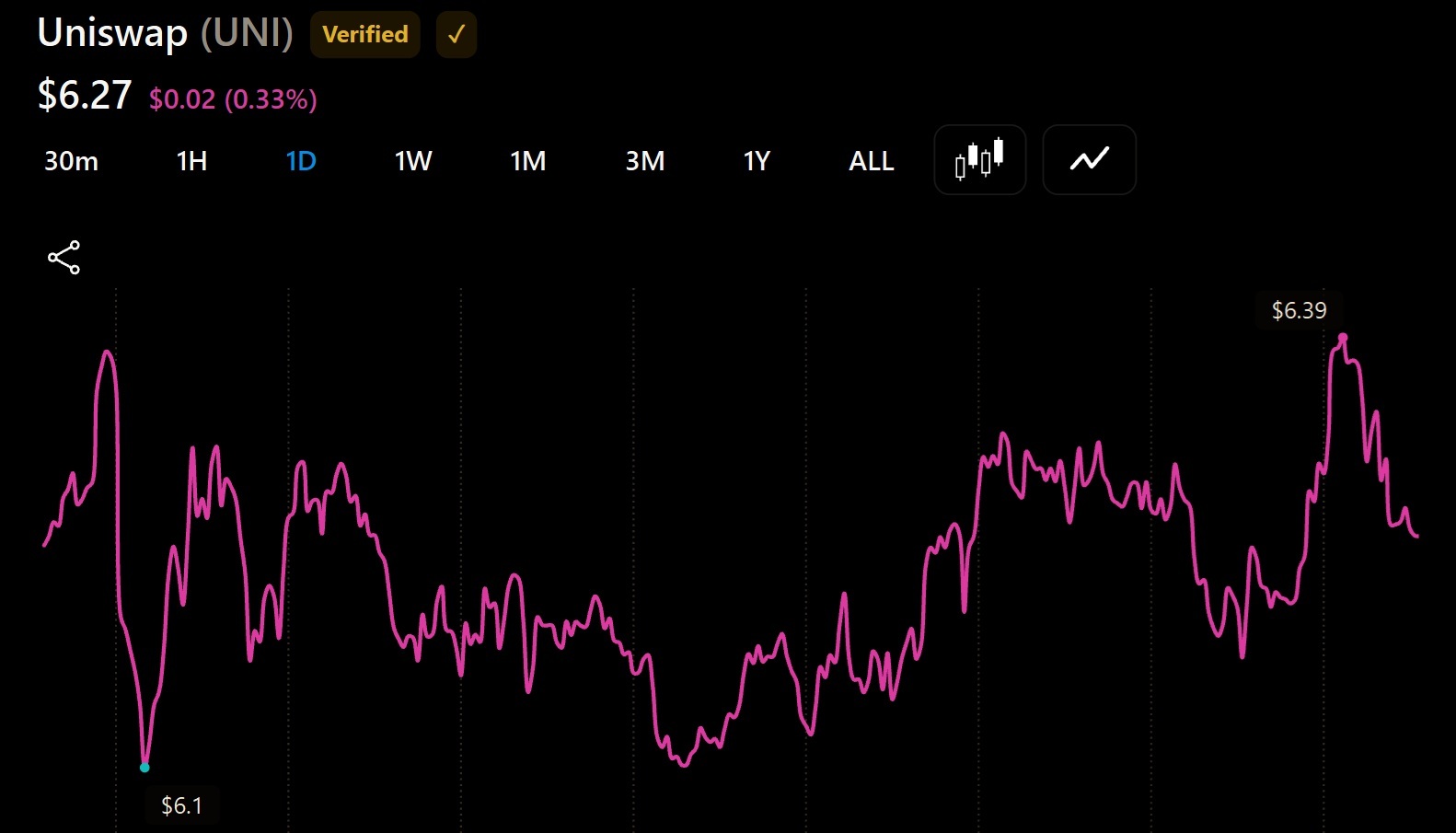
UNI traded at $6.27 earlier today with a $3.9 billion market cap, down about 1% on the day, even as bitcoin’s price slipped 1.4%. The burn is small against that base. A $1.15 million day annualizes to roughly $420 million, or about 11% of supply if it held, which it will not. Burns fell back to normal on quieter days all summer.
The durable takeaway is structural, as Uniswap’s revenue is now tied to a Robinhood-owned chain that did not exist 10 weeks ago, and that chain’s biggest day exposed how dependent it is on Ethereum’s blob market. Both facts will matter the next time volume spikes.