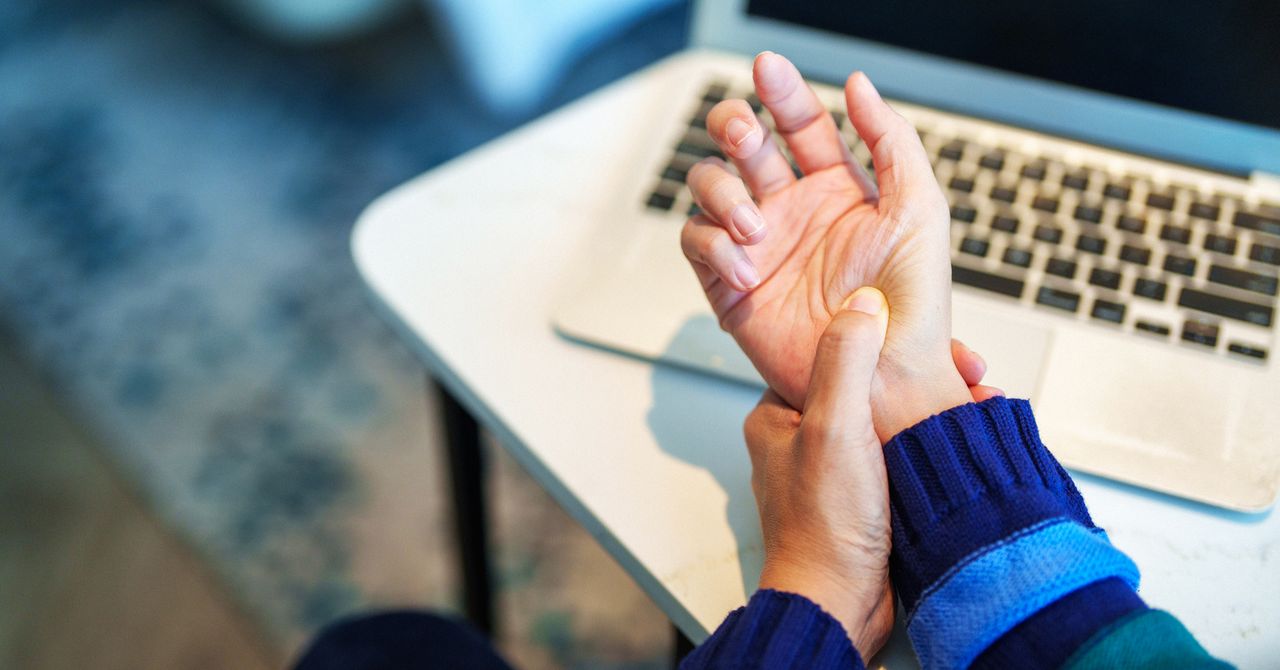
Roughly 500,000 Americans suffer nerve injuries that require treatment each year, whether from an errant attempt to hack out an avocado pit or an unfortunate woodworking accident. Many will never get full feeling back in their fingers. But a startup has developed a thick and sticky liquid that could change that, and it’s begun deploying it with surgeons in the US.
French firm Tissium is working to replace and supplement medical stitches with a liquid that attaches to tissue when exposed to light. A biopolymer made of fatty acid and glycerol—both of which naturally occur in the body—the liquid acts like a splint to hold the nerves in place while the tissue mends itself. It then biodegrades after the body heals, leaving nerves intact.
Peripheral nerves make up the sprawling network of the nervous system, branching off from the brain and the spinal cord to the rest of the body. When one is cut, often through injuries involving knives or machinery, the two ends need to be held in place while the nerve slowly repairs itself. Fail to do so, and you’ll be left with symptoms ranging from tingling and no feeling at all to electrical-like stabbing pain.
Aligning severed nerves requires micro-sutures, which is “a very delicate technique,” Tissium cofounder and deputy chief executive officer Maria Pereira says, “so we are trying to provide a new way and a better way for peripheral nerves to be prepared in a consistent manner, a less traumatic matter, and with better patient outcomes.”
The company ran a trial with 12 patients in the US who had injured nerves in their fingers. All 12 regained the ability to feel temperature, pain, texture, and light touch in their fingers—compared to a little over 80 percent with other techniques. None reported pain or device-related complications a year later. The treatment is already available for surgeons to purchase in the US.
“While further evidence is needed, it’s exciting to see more advanced biomaterials and regenerative medical techniques at the disposal of the modern surgeon,” says Simran Chana, a surgeon, materials scientist, and director of the Frontier Technologies Laboratory at the University of Cambridge. (Chana isn’t involved with Tissium’s work.)
Tissium has raised €30 million in private investments from venture capital firms and family offices to expand commercialization, the firm tells WIRED exclusively, plus €30 million in debt financing from the European Union’s lending arm, the European Investment Bank. The firm will continue to manufacture its product, which received FDA marketing approval last year, in northern France.
The funds will also support the development of applying the technology to other issues: Tissium expects to enroll around 200 patients in a US trial to help the body heal after hernia treatment. Surgeons heal hernias by pushing the bulging organ or tissue back through the muscle wall and then reinforcing the area with stitches and mesh. Currently, “there can be some inconsistency on how the sutures are performed, which can impact outcomes,” says Pereira, who is also the company’s chief innovation officer. She adds that Tissium’s treatment can provide that consistency, which can in turn improve the recovery process.
While she is finalizing the results of a European study testing the treatment on 78 patients undergoing hernia repair, Pereira says that surgeons have been able to apply Tissium’s goo 100 percent of the time and that patients show signs of improved quality of life in terms of pain levels, recovery, and activities, and a lower recurrence rate of hernias.
Tissium is also developing products for cardiovascular reconstruction, which was the initial application Pereira conceived of while earning a PhD in bioengineering nearly 20 years ago. The company is preparing to launch a randomized pivotal trial in the US for its cardiovascular product, which the new funding will support.