NASA‘s Hail Mary attempt to rescue a falling spacecraft has failed, leaving scientists to grieve the eventual loss of a key space telescope later this year.
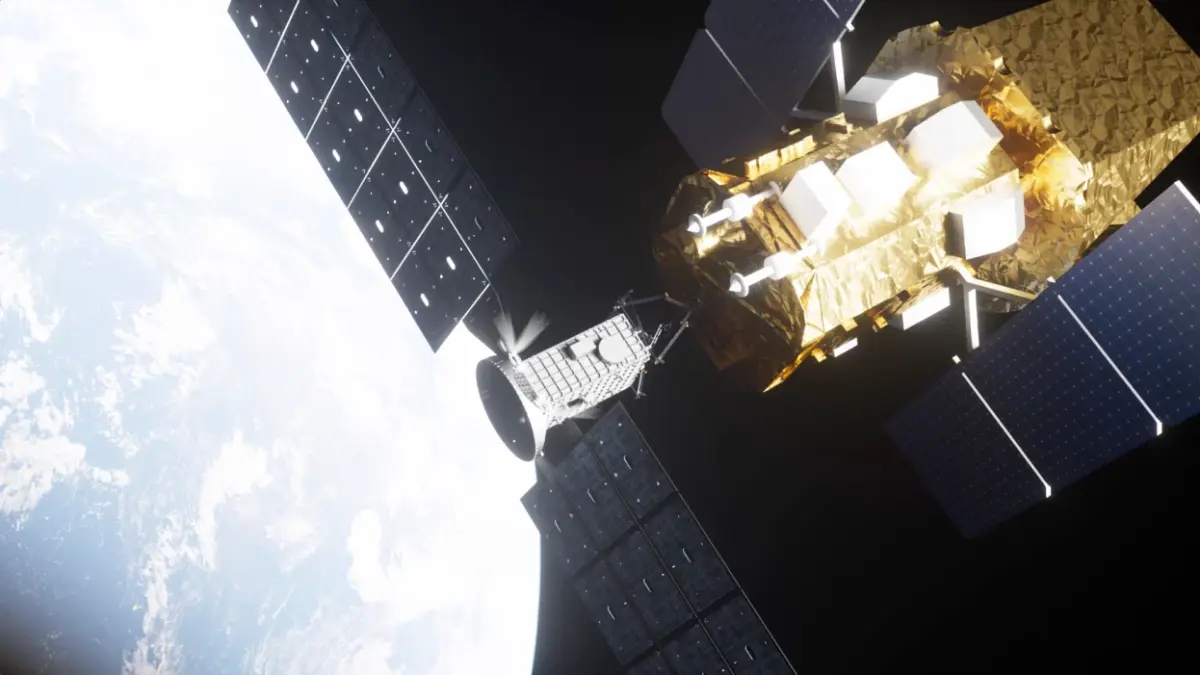
The space agency hired Arizona-based Katalyst Space Technologies to build a small servicing spacecraft to push the Neil Gehrels Swift Observatory about 150 miles higher, into a safer orbit. The contractor had less than a year to build and plan the urgent mission. Their rescue craft, called LINK, launched on a Northrop Grumman Pegasus XL rocket on July 3.
But ongoing problems with LINK’s “attitude control” system — the orientation equipment — since then mean the mission will not capture and boost Swift as planned, officials announced Wednesday.
The demise of the NASA spacecraft, which will likely burn up in Earth’s atmosphere in a matter of months, will eliminate a crucial telescope for catching brief, one‑time‑only events in the sky. In its absence, scientists will have fewer tools to chase the most powerful explosions in the universe, called gamma-ray bursts, as well as black hole flares and changing comets.
“This is not the outcome we were working toward, but it does not change why this mission was worth attempting,” said NASA administrator Jared Isaacman in a statement. “The team moved with extraordinary speed to give Swift a chance to carry out more science while advancing capabilities America will need for satellite servicing in the future.”
Mashable Light Speed
For nearly two decades, Swift was on the lookout for gamma-ray bursts, brief blasts of high‑energy light that can outshine entire galaxies for a few seconds. It launched in 2004 into low-Earth orbit, a few hundred miles above the planet, and was only supposed to run for two years.
Swift outlived predictions and became the go-to first responder for ephemeral cosmic events over the years, whipping around in less than a minute to new targets of interest.
Though the observatory had been going strong, with all of its instruments still in good shape, a combination of solar storms and a thickening upper atmosphere dragged the spacecraft down and made it unstable. That quashed earlier hopes that it could continue working into the 2030s.
Katalyst officials said the team will still try to carry out a close flyby with LINK, short for Lightweight In-space Navigation and Kinematics, to test navigation and docking techniques for future satellite servicing missions.
“We took on this high-risk, high-reward challenge and are proud of the milestones we reached along the way. We have already learned a tremendous amount,” said Katalyst CEO Ghonhee Lee in a statement. “Now our job is to turn those lessons into something durable — building a repeatable playbook to inform future rendezvous and proximity operations and satellite servicing.”
NASA repeatedly described the effort as a “first‑of‑its‑kind” mission on an unusually short timetable. They have framed the project as a step toward an era where future spacecraft might include standard attachment points and replaceable parts, so small robotic “space mechanics” can fix or refuel them instead of letting expensive hardware burn up in the atmosphere.
“NASA should be willing to move quickly and take smart risks when the potential return is worth it, and that is exactly what we did with this mission,” Isaacman said.